Circular Economy on board
Circular@Sea
What volume of resources do we humans consume – and how much of this can Planet Earth renew?
The question highlights an imbalance that the circular economy model seeks to address. On the one hand, the model advocates the efficient use of resources – and on the other hand, it recommends keeping materials and products in the economic cycle as long as possible. Feasible circular economy methods include sharing, repairing, reusing or refurbishing, recycling. These also comprise the product-as-a-service approach, where utility takes precedence over ownership – leasing is a clear example. This takes the model well beyond waste management alone.
Cornerstone of the circular economy

Design-phase optimization

Maximizing product lifetime

Natural regeneration
Circular Cruising - circular packaging concepts for cruises
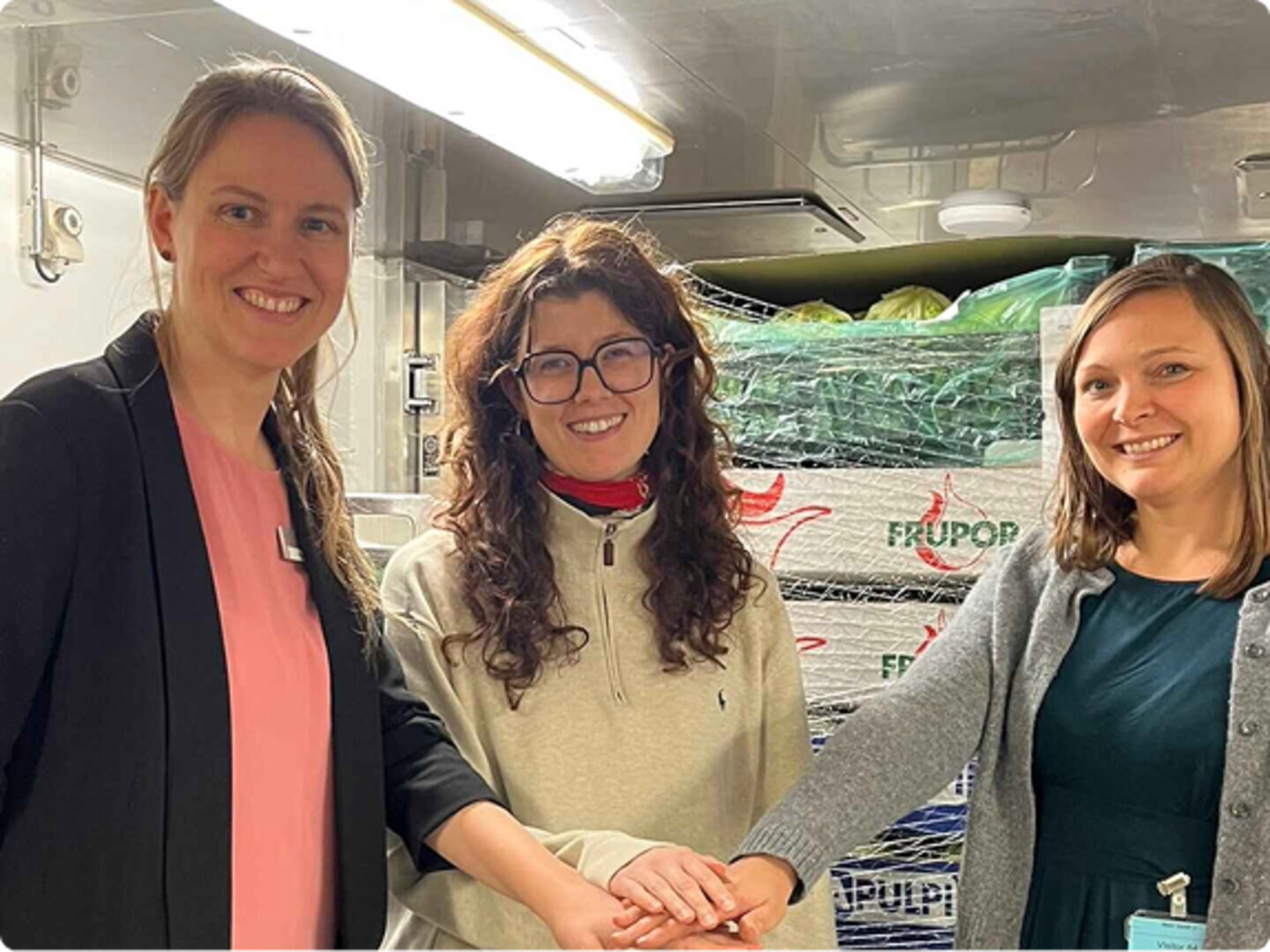
Together with Futouris e.V. and expert partner EPEA, TUI Cruises has launched a project focusing on packaging concepts for the cruise industry. The project aims to develop approaches for reducing packaging waste. To this end, packaging and material flows within the cruise ship supply chain are being analyzed, and potential areas for optimization are being examined.
A joint inspection of Mein Schiff 3 took place in Bremerhaven, Germany in December 2024 to launch the project.
Our Circular Economy Measures
Onboard dining


Textiles made of organic cotton