05.08.2026/Sustainability & Innovation/Mein Schiff
The new generation of ships expands the use of alternative fuels
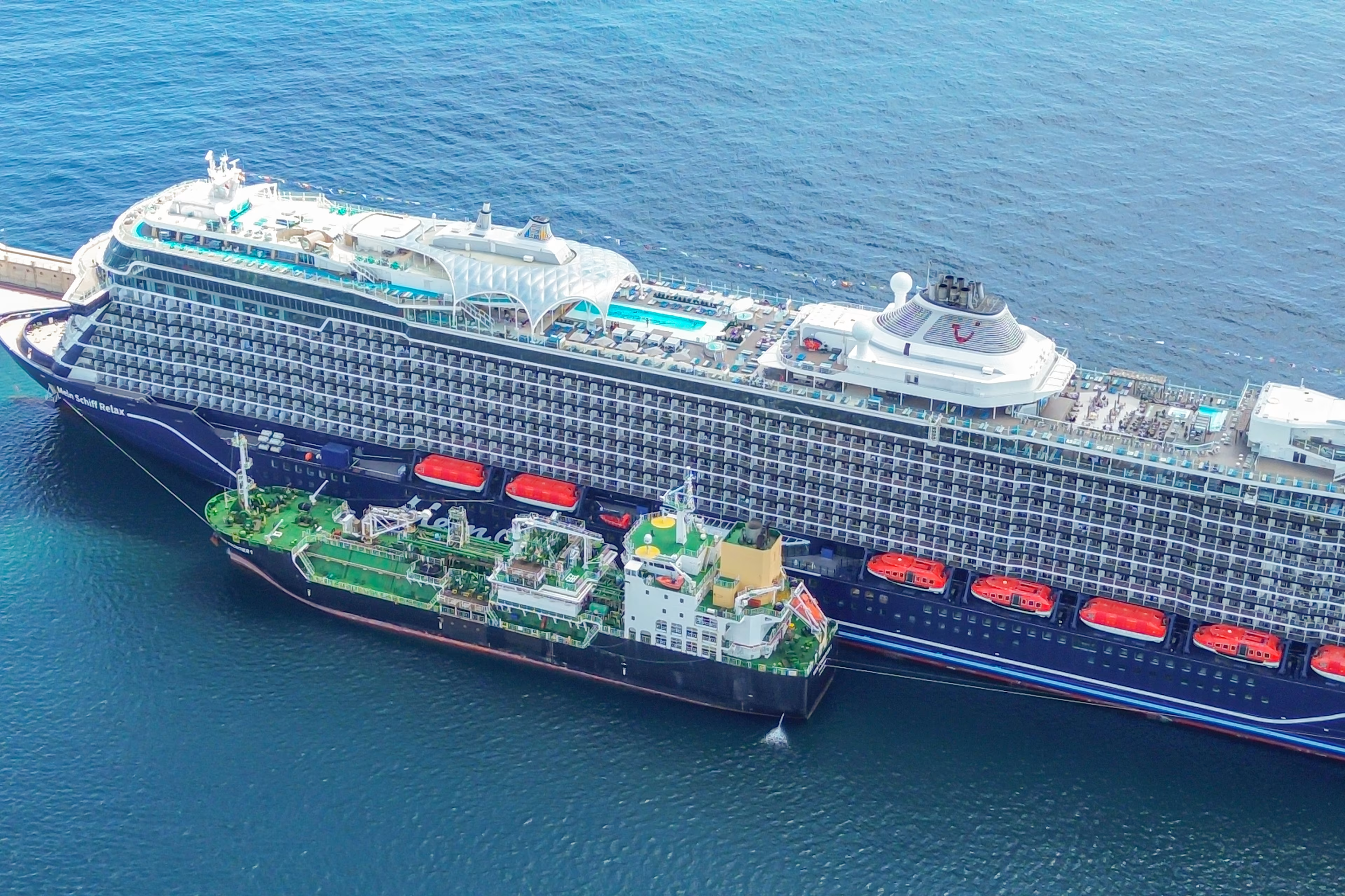
The Mein Schiff InTUItion class runs on bio-LNG
Both ships in the InTUItion class are designed to run on bio-LNG and are operating entirely on this fuel during the current season
Bio-LNG significantly reduces greenhouse gas emissions compared to fossil fuels
Shore power connections and dual-fuel technology increase flexibility in the use of alternative energy sources
With the entry into service of Mein Schiff Flow in June 2026, the second liquefied natural gas-powered ship in the InTUItion class is now also in service. Both new vessels in the InTUItion class are equipped with dual-fuel propulsion systems. These allow for the use of marine diesel and liquefied petroleum gas. The use of renewable LNG (bio-LNG and e-LNG) is also possible without any technical modifications. Bio-LNG (liquefied biomethane) is a renewable fuel made from biomethane. Compared to fossil fuels, its use results in lower greenhouse gas emissions.
Mein Schiff Relax has already refuelled with bio-LNG twice in 2025 and will now complete its summer season in Northern Europe using this fuel exclusively. Its sister ship, Mein Schiff Flow, has been regularly refuelling with bio-LNG in Barcelona since the summer of 2026 and will continue to use it in the winter.
The use of alternative fuels such as bio-LNG is a key element of the company's decarbonisation strategy. “We take responsibility throughout the entire value chain, from product development to ship operations”, explains TUI Cruises CEO Wybcke Meier. "Our goal is to gradually reduce the environmental impact of our business operations. By using bio-LNG, we have already saved approximately 26,000 metric tonnes of CO₂e this year compared to operations using conventional fuels (as of July 2026). "For the entire year 2026, the reduction is expected to be around 50,000 metric tonnes of CO₂e."
In addition, the new generation of ships is equipped with improved catalytic converters that can reduce nitrogen oxide emissions during port operations to a level comparable to Euro 6 limits. The ships are also equipped with a shore power connection. During port calls, which account for about 40 per cent of operating time, the ship’s onboard power generation can be bypassed if shore power is available. Compared to power supplied by the ship's onboard systems, this can reduce emissions generated during layover. The use of shore power has increased compared to the previous year; more than 90 per cent of the electricity purchased to date has come from renewable energy sources.
For more information on this topic, please see the latest 2025 Sustainability Report: https://corporate.tuicruises.com/de/sustainability/sustainability-report